
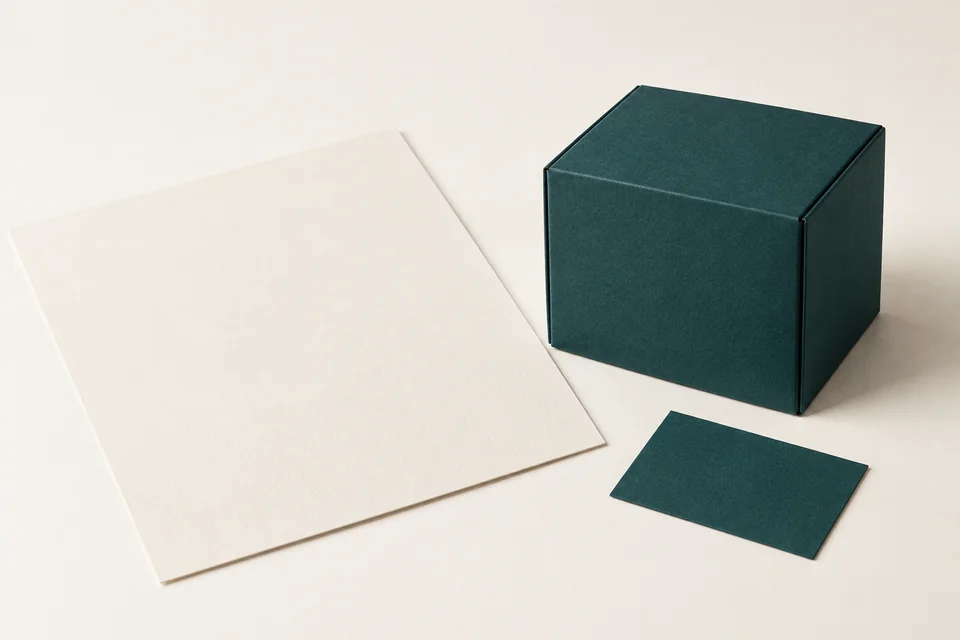
Each type of pattern answers a set of questions. The blank sample helps check the structure; Test prints, often called proofs, help approve content or colors according to an agreed range. The finished sample shows materials, printing and machining combined.
Know what each type of sample is used to review
| Sample type | Main goal |
|---|---|
| White sample | Fit, opening, insertion and handling |
| Layout test print | Content, reading direction, design position |
| Color test prints according to uniform procedures | Reference color within confirmed range |
| Completed sample | Surfaces, folds, straps, stickers and effects |
Ask clearly what materials and processes the sample uses, which parts are the same as the production batch and which parts are for reference only. Note the differences on the approval sheet to avoid viewing a layout trial as a standard sample for all elements.
Use a common approval sheet
The approval form needs to have the design version, specifications, color samples, date and decision maker. Separate the accepted part from the part that needs fixing. For important factors, save physical samples for the parties to compare.
Try it with the real thing
Let the packaging and sales department try out the full product. Check fit, opening, installation time and brush marks. The color is beautiful but the tray is difficult to install, which is still a problem that needs to be resolved before production.
Manage changes after approval
When changing paper, size, handle or coating, determine which part needs revision. A general agreement is not enough if many different files or templates exist.
Are sample photos enough for acceptance?
Photos are suitable for recording visible layout or errors. Color, surface feel and fit require actual samples or agreed testing methods.
Send SquareBag the usage schedule and important criteria to jointly organize the sample approval step suitable for the project.
Explore Packaging printing or Exchange specifications with SquareBag.
See the Printing Techniques group