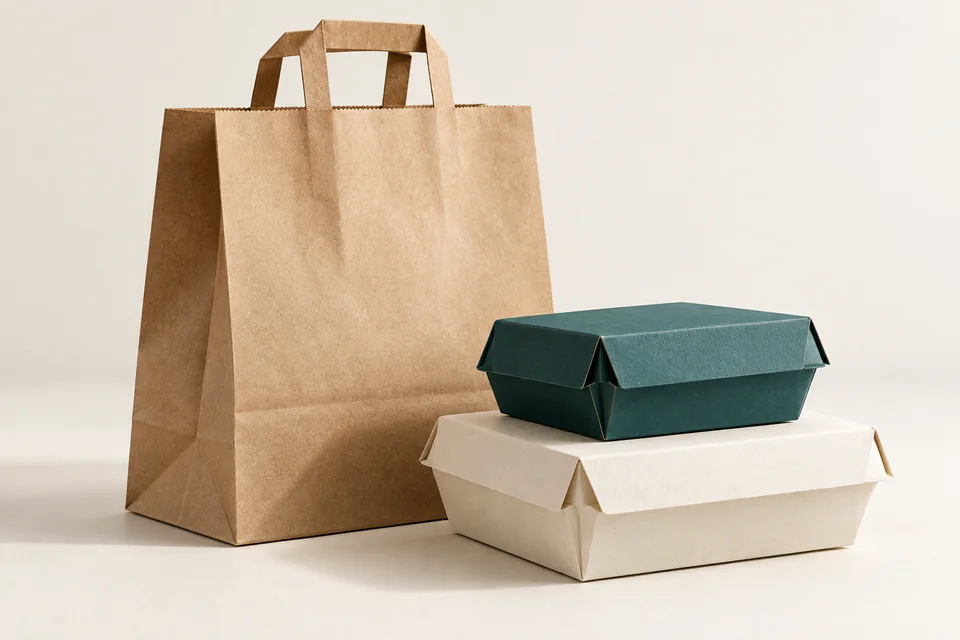
Kraft bags for takeout food, often called takeaway, help collect boxes and cups into an easy-to-carry order. The bag size needs to match the way the food is arranged, and the paper and handles need to be checked for hot, cold or humid conditions.
Test order before measuring bags
Try out common menus, multi-dish menus, and common heavy menus. Use the correct boxes, cups with lids, trays and accessories. The bottom must have enough room for the box to lie in the right direction; The mouth of the bag needs to be opened conveniently when the staff is packing the goods.
Distinguish between the outer layer and the food contact layer
Outer bags often contain canned food. Kraft color does not indicate that the material is suitable for direct contact with food. If this exposure exists, separate confirmation is required; At the same time, check for leaks and steam to soften the bag.
| Situation | How to evaluate samples |
|---|---|
| Hot box | Try the package according to the expected delivery time |
| Cold drinks | Check for condensation and stability |
| Many cascading boxes | See tilt, deflection and bottom resistance |
Don't browse with empty pockets
Let the staff try closing the order under counter conditions. After the expected waiting and delivery time, look at the bottom, straps, seams and box position. Record the same test conditions to compare samples fairly.
Smaller bags can use less paper but can be difficult if the box is forced to tilt. At that time, you need to review the bag size or arrangement instead of just comparing the unit price.
Do I need to laminate the entire bag?
Before adding lamination or coating, determine the moisture source and exposure time. The finish does not replace a sealed box; The addition of materials should also be considered if post-use treatment is targeted.
Send SquareBag a set of boxes, cups and common delivery times to exchange kraft bags that suit the store's service style.
Explore Paper bags and gift bags or Exchange specifications with SquareBag.
See Paper Bags group