
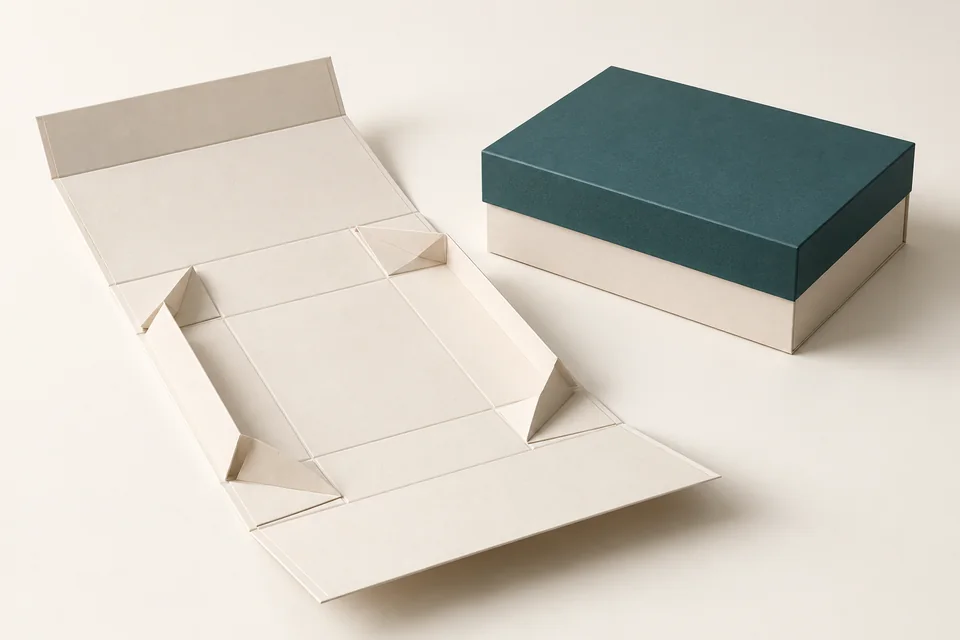
The flat folding hard box can be collapsed upon delivery and erected before packing the product. This method can reduce storage space, but requires additional installation work and strength testing. Benefits should be evaluated across the whole lot.
Measure the volume of boxes and packages delivered
Measure the box in a flat state, after erection and when packing multiple boxes into a package. If the inner tray cannot be folded, include the tray volume; Just measuring the box can make the savings look larger than they really are.
Calculate the time to build the box
| Work | Data to be collected |
|---|---|
| Build the box | Time and number of operations per box |
| Lock structure | Robustness, misalignment and correction ability |
| Add insert | Installation time and storage location |
Let the packing staff try to build a sample group. Record the time, number of operations, places that are easily misaligned and how to fix them. Instructions need to be short, clear, and clear enough for new users to follow correctly.
Corner latch and closing mechanism
After mounting, check the corners, lids and locking details with the product inside. If there are magnets or accessories, clearly state the material and location. Try opening and closing according to expected usage needs.
An option to reduce shipping volume could increase labor during gift-making season. Compare the savings in inventory and delivery with the labor, errors, and schedule impact.
When should I keep a pre-assembled box?
Pre-assembled boxes can be suitable when the quantity used is small or needs to be packed quickly at the counter. Different delivery methods can be chosen for central warehouses and stores if the distribution process allows.
Send SquareBag usage quantity, distribution method, and product samples to evaluate the flat folding box before converting.
Explore Paper box solutions or Exchange specifications with SquareBag.
See Paper Box group