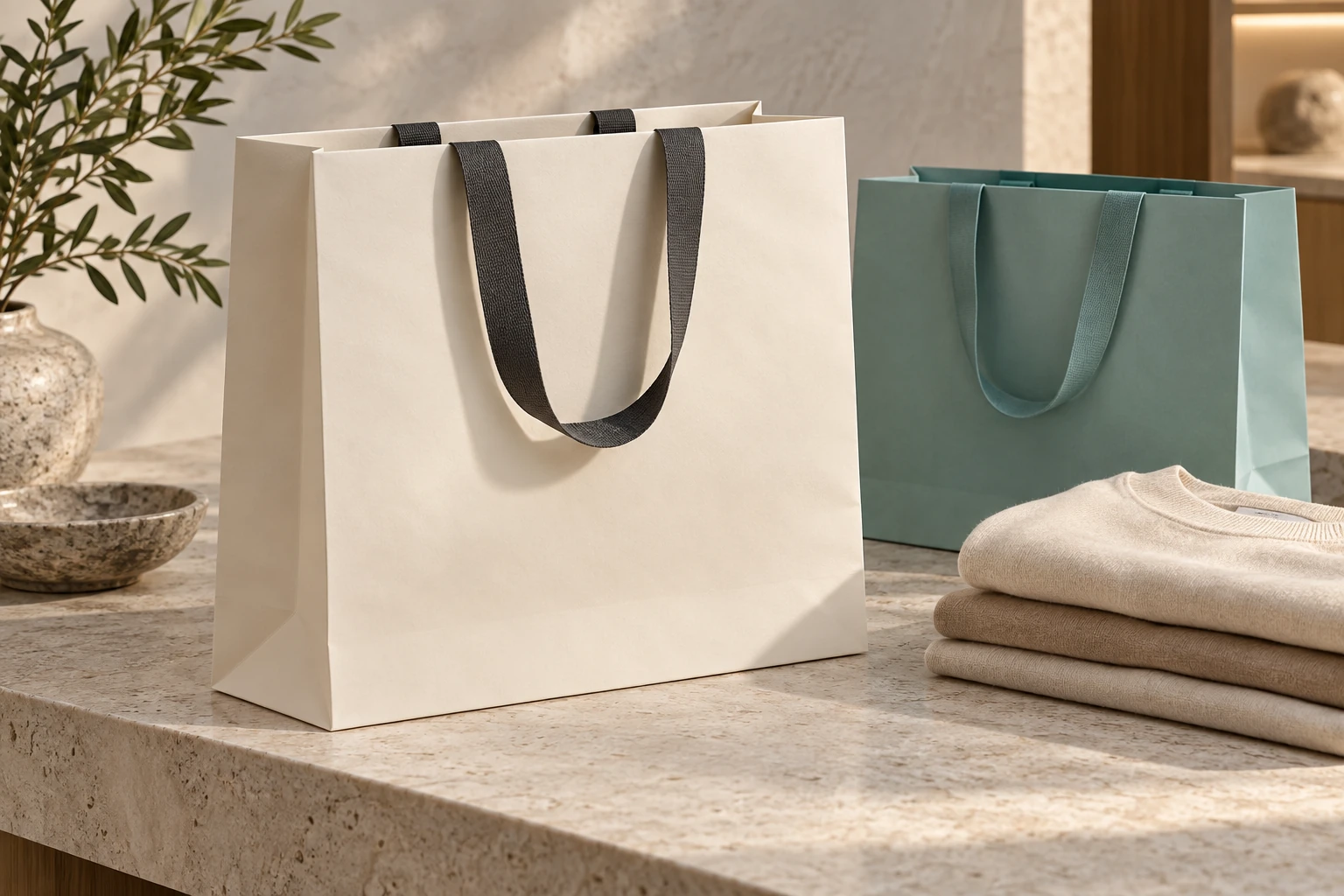
For fashion brands, paper bags continue to be present after the transaction is completed. Customers can take the bag through the shopping center, put it at home or reuse it to carry things. The design needs to maintain the spirit of the brand in these contexts, while also helping clothes to be handed out neatly.
Starting from the way the store packs the goods will help the bag model have a basis. A shirt brand, a shoe store, and an accessories brand don't necessarily need the same pocket ratio.
Take folding as a starting point
Measure clothes after folding according to the procedure at the counter, including protective bag or lining paper if available. For shoes, measure the box in use. For accessories, see gift boxes and multi-item orders.
Try it with commonly sold items, not just the biggest products. If you choose a rare large item bag, most transactions may require packaging that is too large.
Express identity through color, logo and material
A minimalist style can be expressed through space, logo proportions and color synchronization. Youthful style can use identifying colors or patterns. Both need to keep the layout clear when the bag is open and has goods inside.
The logo does not have to cover the entire bag. What matters is placement, clarity, and compatibility with other items such as boxes, hang tags, or thank you cards.
If the brand uses a specific color, look at the color on the correct paper and finish. Color tones that look good on screen may feel different in store.
The handle needs to match the product
Flat fabric straps, string straps and paper straps give different feels. Consider the size of an order, the desired format, and the ability to stack bags under the counter.
A large bag may need handles of the appropriate length for convenient holding. With small bags, straps that are too long can make the overall appearance unbalanced. This decision should be tested with a stock sample.
Build sets of bags instead of multiple separate patterns
Bag sizes can share the same color, logo placement and strap details. When customers buy different product groups, the packaging still maintains a unified feel.
A store might use small sizes for accessories and large sizes for clothing. The two sizes keep the same background color, logo color and strap style. Each size adjusts the logo scale for a balanced layout, instead of scaling the entire design to the same ratio.
Consider a separate bag for the collection
Seasonal patterns can create newness, but need to forecast demand and usage time. Bags printed with the year, event name or a specific collection are at risk of being difficult to continue using once the campaign ends.
One option to consider is to keep the main bag in a permanent design, with seasonal information on a tag or additional packaging. Which option is suitable depends on your image goals and actual costs.
Review right at the counter
Let employees try opening bags, folding items, placing orders, and adding lining paper. Check bags when stacking, when taking out and when customers take them away. If the printed surface rubs easily, both the finish and the packaging of the bag need to be changed before use.
Paper bags do not need to carry the entire brand message. A consistent, easy-to-use and well-done design can make a clear impression.
Are you building packaging for a fashion store? Send SquareBag to identify the main product group to exchange bag sets that suit your sales style.
Talk to SquareBagAll articles